


Do Stumps Attract Carpenter Ants? What to Know
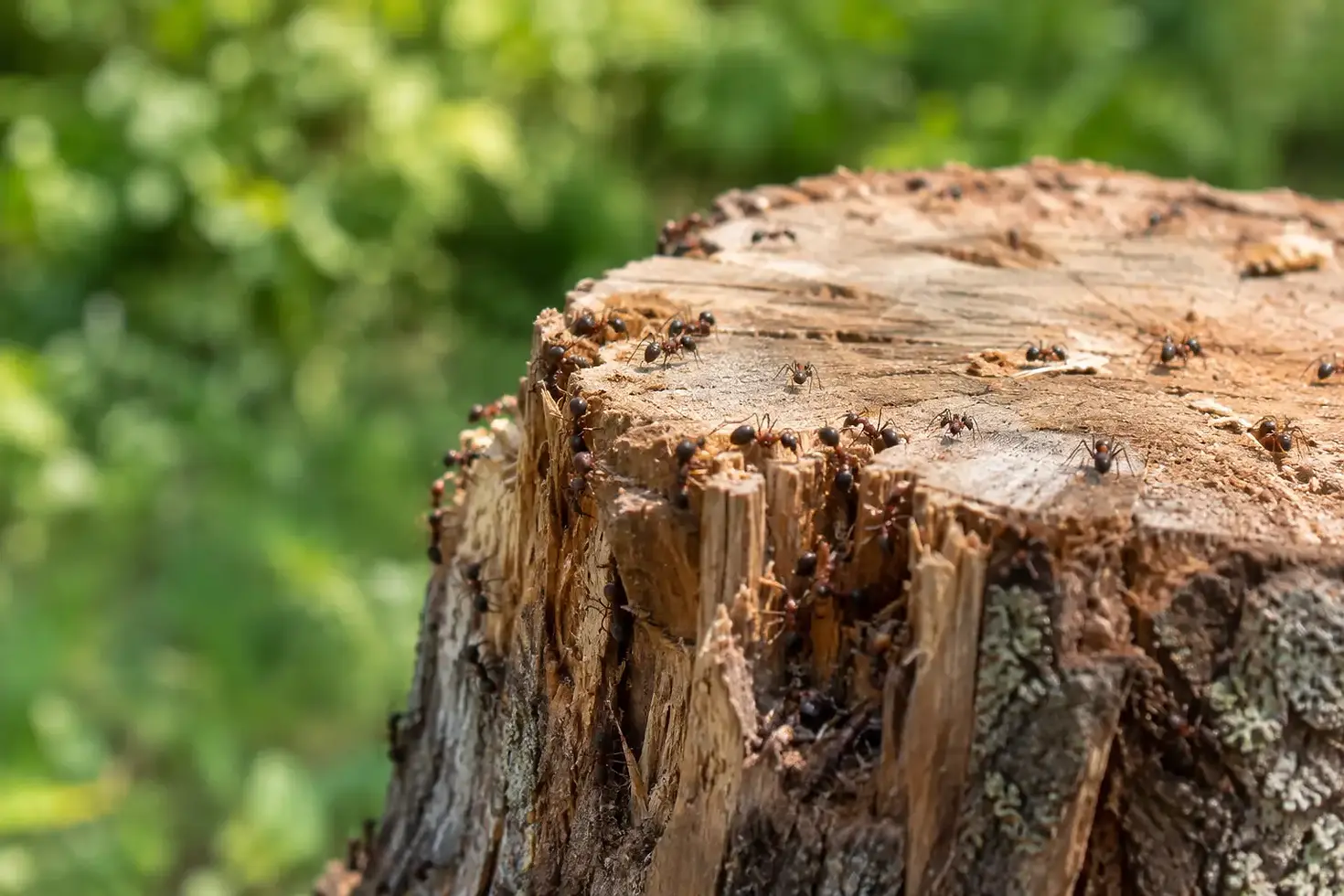
A stump can look harmless sitting at the edge of the yard, but homeowners are right to ask: do stumps attract carpenter ants? They can. An old stump, especially one that is damp, rotting, or already full of cracks and tunnels, can provide carpenter ants with a convenient place to nest.
That does not mean every stump in a Southern New Hampshire yard will lead to ants in the house. Carpenter ants are common outdoors, and a healthy yard can have them without a structural problem. The concern is whether a decaying stump is helping a colony establish itself close to your home, garage, shed, or deck.
Why Stumps Can Attract Carpenter Ants
Carpenter ants do not eat wood the way termites do. They excavate wood to create smooth galleries for nesting. Their preferred material is softened or moisture-damaged wood because it is easier to tunnel through.
A freshly cut stump may not be very appealing at first, particularly if it is solid, dry, and exposed to sun and wind. Over time, though, weather does its work. Rain enters the cut surface, the roots begin to break down, fungi soften the wood, and the stump becomes a more comfortable nesting site.
A stump is especially attractive when it stays wet after rain, sits in dense shade, or is surrounded by heavy mulch, leaves, brush, or stacked firewood. These conditions do not create carpenter ants, but they create the kind of protected, humid environment carpenter ants often use.
The bigger issue is proximity. A colony nesting in a stump far from the house may never become your problem. A colony nesting in a stump near a wood-sided home, porch, garage, or outbuilding has more opportunities to move into another suitable location if it finds damp or damaged wood nearby.
Do Stumps Attract Carpenter Ants Into Your House?
Not automatically. Carpenter ants usually enter a house because there is a good nesting location or a reliable food source, not simply because a stump exists in the yard. Indoor carpenter ant activity is often tied to moisture problems such as a roof leak, plumbing leak, wet window trim, poor drainage, or water-damaged framing.
Still, leaving an old stump near the house can make the situation less favorable. Think of it as nearby habitat. The stump can support a satellite nest, give ants cover, and keep activity close to the areas you want to protect.
This is why removing a stump is a sensible preventive step, but not a substitute for fixing moisture issues around the home. If carpenter ants are already appearing indoors, inspect for water damage and consider a qualified pest professional. Grinding the stump removes one potential nesting site, while moisture repairs address the conditions that can make the house attractive.
Signs a Stump May Be Housing Carpenter Ants
You do not need to split a stump apart to suspect ant activity. Watch the area during warmer weather, especially in late spring and summer when ants are most active.
One clue is large black ants moving in and out of cracks, root flare areas, or soft spots around the stump. Carpenter ants vary in size, but workers are often noticeably larger than the small pavement ants homeowners commonly see around driveways.
Another clue is coarse, sawdust-like material near openings in the wood. Carpenter ants push out a material called frass as they excavate galleries. It can contain wood shavings, insect parts, and other debris. It is not always easy to spot outside because rain and lawn maintenance can scatter it.
You may also notice winged ants around the stump or nearby lights during the spring. Winged carpenter ants are reproductive ants leaving the nest to start new colonies. Seeing a few outdoors is not unusual. Seeing many winged ants inside the home is a stronger reason to investigate.
A soft, hollow, crumbling stump is not proof of carpenter ants. Decay fungi, beetles, and ordinary age can cause the same condition. But a deteriorated stump does offer more hiding places for carpenter ants and other yard pests than a sound, recently cut one.
Other Problems Old Stumps Can Bring
Carpenter ants get the most attention, but they are not the only reason homeowners choose stump removal. An old stump can interfere with mowing, create a tripping hazard, collect weeds, and take up usable space where you would rather have lawn, a garden bed, or a new planting.
As the roots decay, the ground around a stump may also settle over time. That can leave uneven areas in the yard. If the stump is close to a driveway, walkway, fence, or landscaping feature, it can make future projects more difficult than they need to be.
Some stumps also keep producing shoots. That is common with certain tree species and can turn a simple leftover stump into a recurring cleanup job. Grinding below grade removes the visible stump and makes it easier to restore the surface of the yard.
When Stump Grinding Makes Sense
If a stump is decaying, close to the home, or regularly in the way, stump grinding is usually the practical answer. A professional grinder reduces the stump below ground level, including the portion most likely to remain wet and sheltered. The area can then be backfilled with the grindings or soil, depending on your plans for the space.
Grinding is not the same as removing every root from the property. In most residential yards, removing the main stump is enough to eliminate the obstacle and allow the area to be leveled, seeded, or landscaped. Remaining roots naturally break down over time.
There are a few situations where timing matters. If you are planning to build a shed, install a patio, plant a large replacement tree, or put in a fence, mention that before the work begins. The location of the old stump and roots may affect how the area should be prepared.
Access matters too. A stump behind a gate, on a slope, or near irrigation, utilities, and landscape features may require a different approach. A reliable stump grinding company will ask for photos or inspect the site, explain what is involved, and give you a clear quote before work starts.
What to Do While You Wait for Removal
If stump grinding is not happening right away, keep the area as dry and open as possible. Clear leaves, brush piles, and excess mulch away from the stump. Do not stack firewood against it or next to the house. Store firewood off the ground and away from the home when possible.
Take a quick look at the exterior of your home as well. Make sure gutters drain away from the foundation, address leaking spigots or downspouts, and watch for soft or damaged wood around doors, windows, decks, and siding. Those repairs do more to prevent an indoor carpenter ant problem than any yard treatment alone.
Avoid pouring chemicals into the stump as a first response. It may not reach an active nest effectively, can create a mess in the yard, and does nothing about a moisture issue in the home. If you see a heavy amount of ant activity indoors, get the house checked rather than assuming the stump is the whole story.
A Cleaner Yard Is a Less Inviting One
An old stump is not a guarantee of carpenter ants, and carpenter ants outside do not automatically mean damage inside. But a damp, deteriorating stump near the house is one more place ants can settle, along with a long list of other reasons it can be worth removing.
For homeowners who are tired of mowing around a stump or wondering what may be living in it, Level Ground Stump Grinding can help restore the space quickly and cleanly. Grind it down, clean up the area, and get back a yard that is easier to use, easier to maintain, and one less hiding place for pests.


Comments