


How to Replant After Stump Grinding Right
- Massimo Hagen

- Jul 28
- 6 min read
Updated: Aug 4
A freshly ground stump gives you back part of your yard, but the spot is not always ready for a new tree the same afternoon. Knowing how to replant after stump grinding helps you avoid a common frustration: a plant that struggles because it was set into loose wood chips, poor soil, or old roots. With a little cleanup and the right planting plan, that former stump area can become lawn, a garden bed, or a healthy new planting.
What stump grinding leaves behind
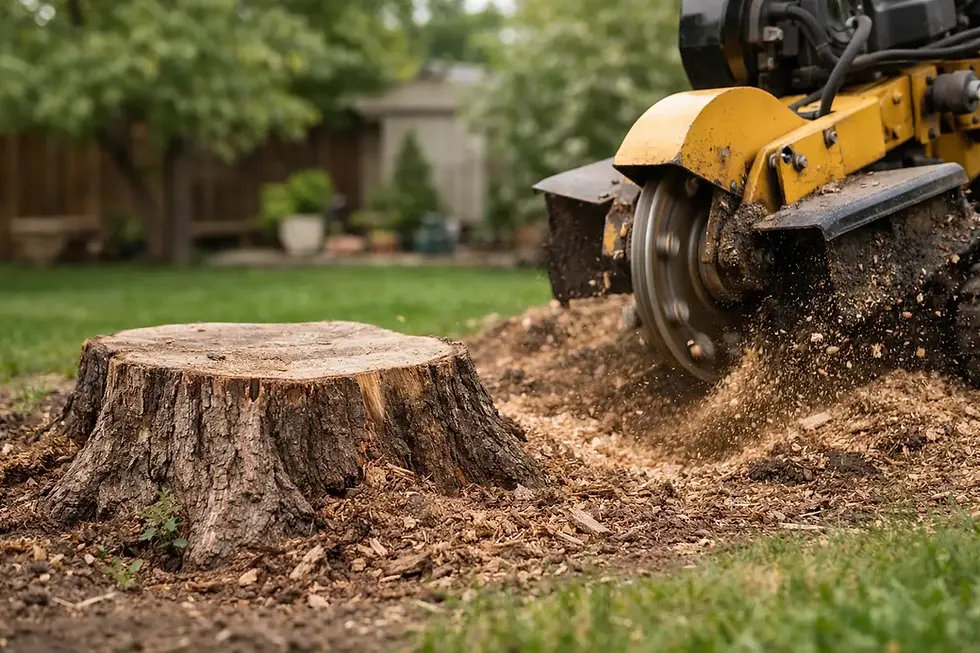
Stump grinding removes the visible stump by turning it into wood chips below ground level. It does not remove every root in the yard. Most of those remaining roots will slowly decay over time, which is normal, but that process can affect the soil around the old tree.
The pile left behind is usually a mix of wood chips, sawdust, and some soil. It may look like good mulch, but it is not good planting soil by itself. As wood breaks down, it can temporarily use nitrogen from the surrounding soil. That means grass seed, shrubs, and new plants may grow poorly if they are planted directly into a thick layer of grindings.
The goal is simple: remove the excess chips, replace them with quality soil, and choose a plant that fits the space. The right approach depends on what you want there next.
Decide what you want to plant before adding soil
A lawn repair is the easiest option. Flowers, ground cover, and small shrubs are also good choices once the soil is prepared. Replanting with a new tree takes more planning because the old root system, settling soil, and reduced space can work against it.
If you want grass, you can usually repair the area after removing the grindings and adding topsoil. For a flower bed or shrub, you have more flexibility because you can build up and improve the planting area with compost and screened loam.
A replacement tree should generally not go in the exact center of the old stump location. Even after thorough grinding, the old tree's roots may still occupy the ground below. A new tree planted too close can have trouble establishing roots, and the soil may settle as old wood decays. When space allows, move the new tree several feet away from the original stump and pick a species suited to the sun, moisture, and mature size of the site.
How to replant after stump grinding: prepare the site first
Start by raking out as much of the coarse wood debris as possible. You do not need to chase every chip, but remove the bulk of the pile from the planting area. Chips can be spread thinly in a separate landscape bed or used around established plants, as long as they are kept away from trunks and stems.
Next, inspect the hole and surrounding soil. Grinding often leaves a shallow low spot. That spot can deepen later as remaining roots and buried wood decompose, so do not simply level it once and assume it will stay that way.
Bring in clean topsoil or a mix of quality topsoil and compost. Fill the ground slightly higher than the surrounding lawn because it may settle. For a lawn area, a gentle mound that blends into the existing grade is better than a noticeable bump. For a planting bed, work the new soil into the top few inches of native soil around the edge instead of creating a hard boundary between two different soil types.
Avoid filling the hole with straight wood chips, fresh sawdust, or heavy clay. Those materials can hold too much water, dry out unevenly, or make it hard for new roots to spread. Good soil should crumble easily in your hand and drain without turning into mud.
Check drainage before planting
Water the prepared area and watch what happens. If water sits on the surface for hours, the spot may need more grading or better soil before you plant. This matters especially in Southern New Hampshire, where spring thaw and heavy rain can expose low areas fast.
If the original tree was removed because the site stayed wet, do not replace it with a plant that needs dry soil. Match the new plant to the conditions you actually have, not the conditions you wish you had.
Planting grass over a ground stump
Grass is a practical way to make a former stump disappear into the yard. After removing chips and adding topsoil, rake the surface smooth and firm it lightly with the back of a rake or by walking over it. The soil should be level, but not packed hard.
Seed can work well during cool, mild weather, especially in early fall or spring. Spread grass seed evenly, rake it in lightly, and keep the top layer consistently damp until it germinates. Straw or a light seed cover can help hold moisture on bare patches, but do not smother the seed with a thick layer.
Sod gives a faster finished look, but the base still needs to be level and well prepared. If the area settles after sod is installed, you may see a dip later. Leave a little extra soil beneath the sod and check the spot over the next season.
Planting flowers, shrubs, or a new tree
For perennials and shrubs, dig a hole wider than the plant's root ball but no deeper. The top of the root ball should sit at or slightly above the finished soil grade. Planting too deeply is one of the quickest ways to stress a new shrub or tree.
Backfill with the soil you removed, amended modestly with compost if needed. It is tempting to create a rich pocket of potting soil, but roots need to grow out into the surrounding ground. A gradual transition gives them a better chance of establishing.
Water thoroughly after planting, then water based on weather and the needs of the plant. New shrubs and trees need steady moisture during their first growing season, but soggy soil is not helpful. A two- to three-inch layer of mulch around the planting area can conserve moisture and reduce weeds. Keep mulch a few inches away from stems and tree trunks.
For a replacement tree, give yourself room. A small ornamental tree may fit closer to the old location than a large shade tree, but it should still be far enough away to avoid the heaviest concentration of old roots and buried wood. If you are unsure where underground utilities run, contact Dig Safe before digging a deep planting hole.
Expect some settling and plan to touch it up
Even a well-prepared former stump area can settle. The deeper the stump and root system, the more likely the ground may sink a little over the next year or two. This is not necessarily a sign that anything was done wrong. It is the old wood underground continuing to break down.
Check the area after heavy rain, snowmelt, and the first full growing season. Add a little topsoil if a low spot develops. For lawn areas, overseed thin patches. For garden beds, top-dress with compost and refresh mulch as needed.
Do not rush to plant a large, expensive tree directly over a freshly ground stump just because the space is open. Waiting a season can be a smart choice if the ground is heavily disturbed or you expect major settling. In the meantime, grass, annual flowers, or a simple mulch bed can keep the area neat.
Get the grinding depth right from the start
A clean replanting job starts with proper stump grinding. The stump should be ground low enough for your plan, whether that means restoring lawn, building a garden bed, or making room for a new landscape feature. Let the stump grinding professional know what you want to do with the space afterward so the work can be planned accordingly.
Level Ground Stump Grinding helps homeowners clear out old stumps so they can get back to using their yards. Once the bulky grindings are removed and the soil is rebuilt, the old stump location stops being an obstacle and becomes usable space again.
Give the new planting a little patience. Good soil, the right amount of water, and room for roots to grow will do more for the finished result than planting in a hurry ever will.


Comments