


What a Difficult Access Project Means for Stumps
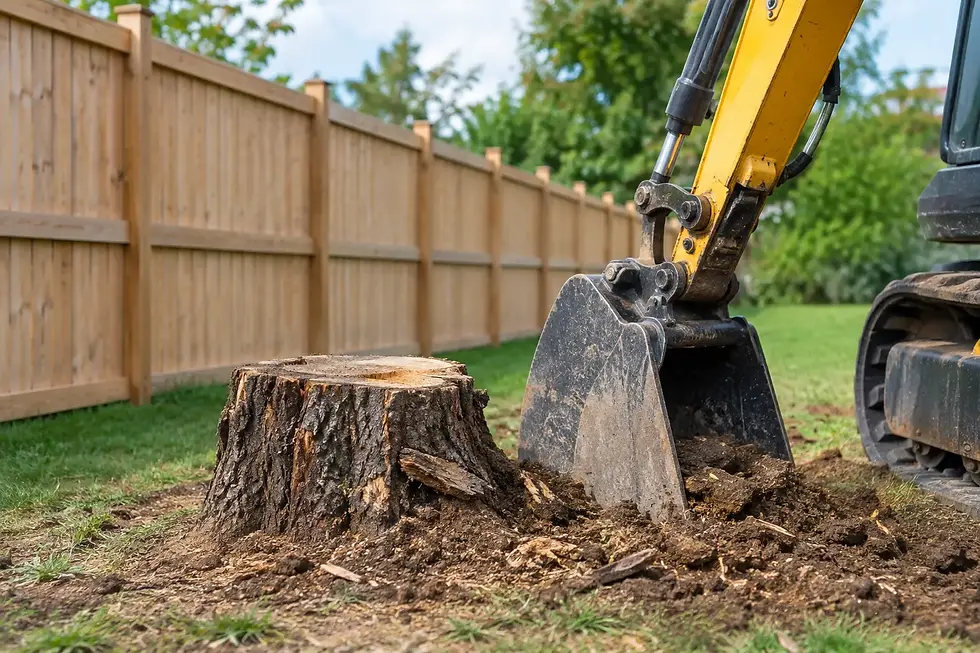
A difficult access project is usually where stump grinding stops being a simple pull-up-and-go job. The stump may sit behind a narrow gate, beside a shed, on a slope, or in a backyard with no direct equipment path. That does not automatically mean the stump cannot be removed. It means the right equipment, a clear plan, and honest site information matter before work begins.
For homeowners, the goal is still simple: get the stump out of the way without tearing up the yard, damaging nearby features, or leaving a mess behind. Access affects how the work is performed, how long it takes, and sometimes the price. It should not mean settling for an old stump that keeps getting in the way.
What makes a stump a difficult access project?
A stump does not need to be huge to create an access problem. In many cases, the challenge is getting a grinder to the stump safely, not grinding the wood itself.
A narrow side yard is one of the most common examples. Gates, fences, retaining walls, AC units, propane tanks, garden beds, and parked vehicles can limit the route to the work area. A backyard stump can also be difficult when there is no gate at all, or when the only path crosses soft lawn, steep ground, or a delicate patio area.
Terrain changes the job as well. Southern New Hampshire yards often have ledge, uneven grades, stone walls, and wet areas that need careful consideration. A stump at the edge of a hill may be grindable, but the operator needs stable footing and a safe way to move equipment in and out. A wet lawn may call for waiting until conditions improve rather than leaving ruts across the property.
The stump location itself matters. Grinding near a house foundation, deck footings, underground utilities, septic components, irrigation lines, or buried landscape wiring requires extra care. The grinder can remove the stump efficiently, but no responsible operator should guess about what is below ground or hidden nearby.
Access affects the method, not the standard
Homeowners sometimes assume that a hard-to-reach stump must be removed by hand or left in place. Often, a compact stump grinder can fit through access points that larger landscaping equipment cannot. That is exactly why specialized stump grinding is different from hiring a general crew with whatever machinery happens to be available.
Still, every property has limits. A gate opening may be too narrow. A steep, loose slope may not be safe for equipment. A stump surrounded tightly by masonry or utility equipment may require a different approach, partial grinding, or site preparation before work can begin. The best answer depends on the measurements, ground conditions, and what sits around the stump.
That is why photos are useful when requesting an estimate. A clear picture of the stump is a good start, but pictures of the access route are just as helpful. Include the gate, side yard, stairs, slope, fence line, and anything that may need to be avoided. If you know the approximate gate width, share that too. It helps avoid surprises on the day of service.
How to prepare your property for a difficult access stump removal
Most homeowners do not need to do much. A little preparation can make a hard-access job safer and faster, though.
Move vehicles, lawn furniture, toys, planters, and loose items away from the path to the stump. If there is a gate, make sure it can open fully and let the contractor know about any latch issues, low branches, or tight turns. Pet owners should keep dogs inside or securely away from the work area. Stump grinders are powerful machines, and the work zone needs to stay clear.
Mark anything you know is buried or easy to miss. This may include sprinkler heads, invisible dog fence wire, landscape lighting, drain lines, or a septic tank cover. Utility lines should be addressed through the proper utility-marking process before grinding. Even when a stump appears far from the house, buried lines do not always follow the path homeowners expect.
Do not worry about cutting the stump down to ground level. A stump grinder needs enough stump material to work with, and cutting it too low can make the job less efficient. If there are surface roots you want addressed, point them out during the estimate. Grinding visible roots can improve the look of an area, but it is not always necessary or advisable to chase every root across the yard.
Why difficult access can affect price
Stump grinding estimates are based on more than stump diameter. Size matters, but access, location, wood type, root flare, terrain, and cleanup expectations all play a role.
A large stump in an open front yard may be quicker than a smaller stump tucked behind a narrow fence line. Extra time may be needed to carefully move equipment, protect vulnerable areas, navigate slopes, or hand-carry debris where a machine cannot reach. Multiple stumps can sometimes lower the per-stump cost because the equipment is already on site, but scattered stumps around a difficult property may take longer than a grouped set in one open area.
This is not about making a simple job sound complicated. It is about giving homeowners a fair quote that matches the real work. A clear, job-specific estimate is better than a low number that changes once the crew arrives and sees the access issue.
What clean results should look like
A properly ground stump should no longer be a tripping hazard, a mowing obstacle, or the centerpiece of the yard. The grinder removes the stump below grade so the area can be covered, seeded, landscaped, or prepared for a new project.
Grinding creates wood chips mixed with soil. Some homeowners want the grindings left on site to use as mulch or to fill the hole. Others want the area raked out and cleaned so they can add topsoil and grass seed. There is no one right choice, but it is worth discussing before the work starts.
If you plan to plant a new tree in the same spot, ask about placement. Planting directly into a heavily ground stump area is not always ideal because the remaining wood material settles as it breaks down. A new tree may do better a few feet away, depending on the space and the type of tree you want.
Questions worth asking before you book
A good stump grinding contractor should be comfortable answering practical questions. Ask whether the company is insured, whether the equipment can fit your access route, how utility safety is handled, and what cleanup is included. If the route crosses lawn or a landscaped area, ask how the crew plans to minimize impact.
It also helps to be direct about what you want when the job is finished. Do you need the stump ground below grade for grass? Are you installing a patio, fence, garden bed, or shed? Is the main concern mowing around the stump safely? The end use affects how deep the stump should be ground and whether surface roots need attention.
Level Ground Stump Grinding focuses on this one job: getting stumps out cleanly and efficiently. For hard-access yards, the details matter, but the expectation stays the same - we grind 'em til you can't find 'em!
When waiting is the smarter choice
Not every difficult access project should happen immediately. Frozen ground can sometimes help protect a lawn, while saturated spring soil can make equipment travel more challenging. Heavy rain, unstable slopes, or an unmarked utility concern may be good reasons to reschedule rather than force the job.
That kind of decision protects the property and the people working on it. Fast service is valuable, but careful service is what prevents a stump removal from becoming a yard repair project.
If a stump is holding up your next yard project, take a few photos of the stump and the route to reach it. A quick look at the real conditions is often all it takes to determine the best way forward - and to turn an awkward corner of the yard back into usable space.


Comments