


Backyard Stump Removal Before and After Results
- Massimo Hagen

- Aug 6
- 6 min read
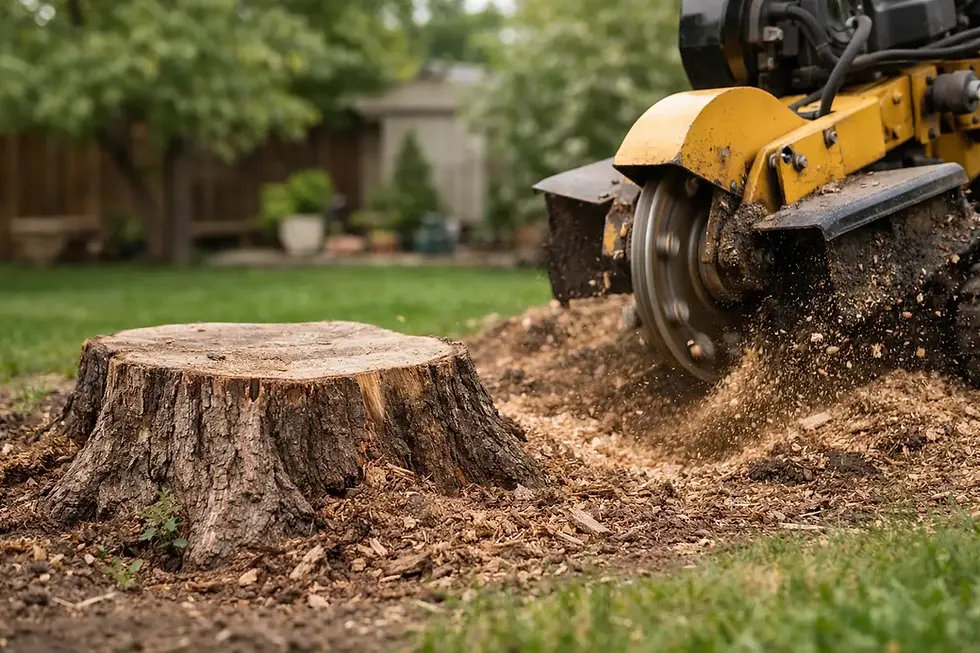
That old stump may look like a small problem, but it has a way of taking over a yard. It catches mower blades, interrupts landscaping plans, creates a tripping hazard, and keeps one corner of the property looking unfinished. The difference with backyard stump removal before and after is usually more noticeable than homeowners expect: an obstacle becomes open, usable ground.
A good stump grinding job is not just about making the wood disappear. It is about leaving the area ready for the next step, whether that means grass, a garden bed, a patio project, or simply an easier lawn to mow.
What a Backyard Looks Like Before Stump Removal
Before removal, a stump often becomes the part of the yard everyone works around. Mowing requires an extra pass with a trimmer. Kids and guests can catch a foot on exposed roots. A stump near a driveway, walkway, fence, or play area can make the whole space feel less maintained.
The stump itself is only part of the issue. Surface roots may rise above the lawn, and the ground around an older stump can become uneven as the wood and roots slowly break down. In New Hampshire yards, freeze-thaw cycles can make those uneven spots more noticeable from season to season.
Some stumps also keep producing shoots. That is common with certain tree species, especially when the roots are still active. Cutting those shoots back may improve the appearance temporarily, but it does not solve the root cause. Grinding the stump below grade removes the source of the regrowth and clears the visible obstruction.
There is also the visual side. A healthy yard can still look neglected when a large, weathered stump sits in the middle of it. Homeowners often put off removing one because they assume it will be disruptive or expensive. Once it is gone, they tend to wish they had handled it sooner.
Backyard Stump Removal Before and After: The Real Difference
The after photo is satisfying because it shows a clean, open area. The practical difference matters even more.
After professional stump grinding, the stump is ground down below the surface rather than left as a low, jagged nub. The resulting grindings are managed, the work area is cleaned up, and the yard is no longer built around a piece of leftover tree trunk. Instead of circling the stump every time you mow, you can move through that section of lawn normally.
The space can be reclaimed in several ways. A small stump in a front or side yard may simply become grass again. A larger stump near the house may make room for a planting bed, shrubs, a shed, a swing set, or an expanded patio. Removing a stump near a fence line can also make repairs and maintenance much easier.
For homeowners thinking about curb appeal, the improvement is immediate. The yard looks intentional again. This matters if you are preparing to sell, hosting family events, or just tired of seeing an old tree remnant every time you look outside.
Safer mowing and less yard work
Stumps are hard on mowing equipment. One close pass can damage a blade, bend a mower deck component, or send debris in an unexpected direction. Even if you never hit the stump, trimming around it every week adds time to a chore nobody wants to stretch out.
Once the stump is ground down and the area is properly finished, lawn maintenance gets simpler. There is less edging, less maneuvering, and one fewer hazard to remember when someone else is mowing the property.
More usable space where it counts
A stump does not need to be huge to waste valuable space. In a compact backyard, a single stump may block the best spot for a garden, fire pit, pool equipment, or lawn furniture. Removing it gives you choices again.
That said, the best after result depends on your plans for the area. If you want to plant grass, the ground may need topsoil and seed after the stump grinding is complete. If you are building a structure or hardscape, the contractor may need to account for remaining roots and soil settling. Stump grinding clears the stump efficiently, but site preparation for a major construction project can involve additional work.
What Professional Stump Grinding Should Leave Behind
Homeowners should expect a visible change, but they should also know what a realistic finished area looks like. Professional grinding removes the stump to a depth that allows the space to be restored. It does not mean every underground tree root across the yard is pulled out like a buried cable.
Trying to excavate every root can tear up a large section of lawn, damage nearby landscaping, and create unnecessary cost. In most residential situations, grinding the stump below grade is the practical choice. The roots naturally decay over time underground, while the surface is restored for normal use.
A clean job should include careful operation around your lawn, driveway, gardens, and nearby structures. It should also include cleanup of the work area, not a pile of wood chips left for you to deal with unless that is what you want. Depending on the stump size and location, some grindings may be useful as mulch, while other situations call for removing or redistributing them so the area can be leveled.
The ground may settle slightly as old roots decompose, particularly with larger stumps. That is normal. Adding topsoil and seed can help establish a smooth lawn, and checking the area over the next growing season lets you address any minor low spots before they become noticeable.
Why DIY Stump Removal Often Looks Different
There are plenty of DIY stump removal ideas, from renting a grinder to using chemicals, fire, or long-term decay products. The right choice depends on the stump, your budget, your available time, and how quickly you need the yard back.
A chemical treatment may help a stump break down eventually, but it can take months or years. Burning can be restricted, risky, and unpredictable, especially near homes, fences, dry grass, or utility areas. Digging by hand is difficult work and can quickly turn a manageable-looking stump into a damaged lawn and a weekend project that keeps growing.
A rental grinder can be an option for an accessible, smaller stump if you are comfortable operating heavy equipment. But access, slope, stone walls, gates, buried utilities, and nearby landscaping all affect the job. Large or awkwardly located stumps are where experience makes a real difference.
Before any grinding begins, utility safety needs to be taken seriously. A professional should work with proper clearance in mind and make sure underground utilities are identified as required. A fast job is only a good job when it is done safely.
Planning for the Best After Result
The easiest way to get the result you want is to decide what comes next before the stump is removed. If your goal is grass, let the stump grinder know so the area can be left in a condition that is easy to backfill and seed. If you are planning a garden bed, you may prefer to keep some grindings for mulch. If the stump is close to a fence, shed, retaining wall, or utility box, mention that when requesting an estimate.
Photos are often enough to start the conversation. A clear picture that shows the stump, its diameter, and its location in the yard helps provide a more accurate job-specific quote. Include anything that affects access, such as a narrow gate, steep hill, nearby garden, or location behind the house.
For Southern New Hampshire homeowners, timing can matter too. Stump grinding can often be handled when the ground is accessible, but wet conditions, snow cover, and soft lawns may affect scheduling or the best approach. A reliable contractor will be straightforward about what can be done now and what may be better handled when conditions improve.
Level Ground Stump Grinding focuses on the part of the job homeowners want solved: getting rid of the stump and leaving the yard looking better than it did before. The goal is simple - grind 'em til you can't find 'em.
If a stump has been sitting in the way of your plans, take a photo, consider how you want to use the space afterward, and get a clear estimate. The best before-and-after transformation starts when the stump stops being something you work around.


Comments