


Can Grinding Damage Irrigation? What to Know
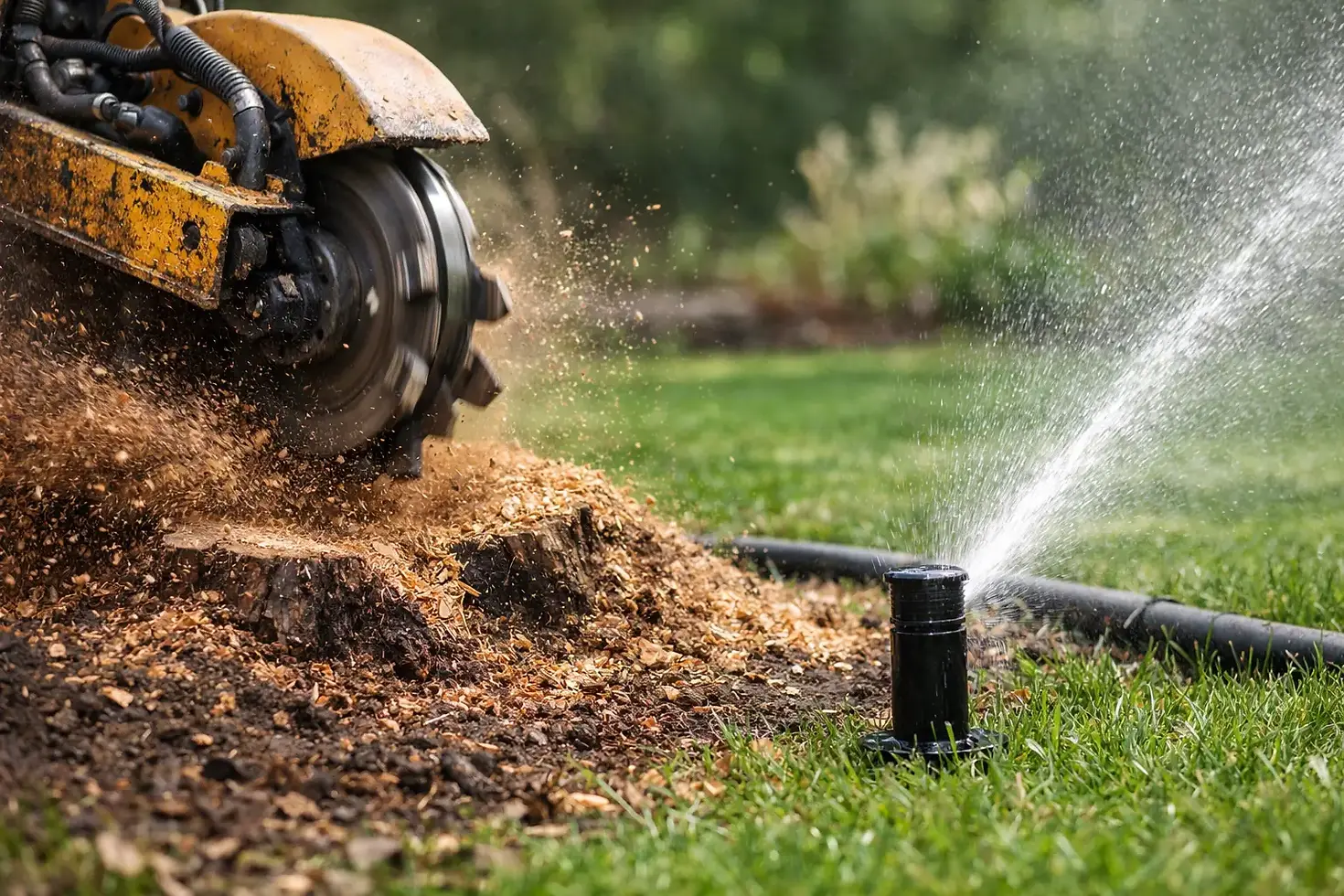
A stump sitting in the middle of a green lawn can be more than an eyesore. It may be right where a sprinkler line, valve box, or irrigation wire runs below the surface. Homeowners often ask, can grinding damage irrigation? The honest answer is yes, it can - but damage is far from automatic when the work is planned around the irrigation system.
Stump grinding is usually less disruptive than digging out a stump with an excavator or pulling it with a truck. A grinder removes the stump in controlled passes rather than tearing through the yard. Still, a grinder is powerful equipment, and irrigation components can be shallow, old, unmarked, or routed closer to the stump than anyone realizes.
The goal is not to guess. It is to identify what is in the work area before grinding starts, make a sensible plan, and check the system afterward.
Can Grinding Damage Irrigation?
Irrigation damage can happen when a grinder reaches a buried pipe or wire near the stump, when roots have grown around a line, or when equipment traffic affects a shallow component. The risk goes up when the stump is large, the irrigation layout is unknown, or a line runs through the root flare.
Most residential sprinkler systems have plastic lateral lines that feed individual heads. Those lines may be only several inches below the lawn surface. Main supply lines, control wires, drip tubing, and valve boxes can also be nearby. A sprinkler head at the edge of a stump is an obvious warning sign, but the line feeding that head may run several feet away from it.
A stump grinder does not work like a trenching machine. It removes wood and roots in the immediate grinding area, often several inches below grade to leave room for soil and grass. That controlled approach helps reduce disturbance, but it does not make buried irrigation invisible or indestructible.
The biggest concern is a pipe or wire directly under the stump or tangled in major roots. If a tree was planted after the irrigation system, roots may have grown around the line over many years. If the irrigation was installed later, the installer may have routed a line around the tree. Every yard is different, which is why a quick look at the property matters.
What Utility Marking Does - and Does Not - Cover
Calling for utility marking is a smart and necessary step before digging or grinding near public utility lines. In New Hampshire, Dig Safe can help identify public underground utilities such as gas, electric, communications, water, and sewer service lines where applicable.
However, private irrigation systems are generally not marked through the standard utility-marking process. The same can be true of private landscape lighting, invisible pet fences, and other homeowner-installed lines. A technician may know exactly where the public utilities are while having no information at all about the sprinkler pipe crossing the backyard.
That is why homeowners should not assume a clear utility mark means the irrigation system is clear, too. The best source of information is often the irrigation installer, a property sketch, a previous repair invoice, or the homeowner who has watched the zones run over the years.
How to Prepare Before Stump Grinding
A little preparation can prevent a frustrating repair later. If you have an irrigation system, tell the stump grinding contractor before the job is scheduled - not when the grinder is already in the driveway. Share anything you know about sprinkler heads, valve boxes, drip lines, control wires, and the direction lines run from the house or valve manifold.
If the system is operating, run the zone nearest the stump. Watch where the heads pop up and where water lands. This will not reveal every buried line, but it provides useful clues about the route. Flag visible sprinkler heads and valve boxes with small marker flags or paint. A clear photo of the area before work begins can also help if a line later needs attention.
Do not rely only on the irrigation controller. Knowing that “Zone 3 covers the side yard” is helpful, but it does not show whether the pipe approaches the stump from the left, right, or underneath. If the stump is close to a valve box or several sprinkler heads, contacting your irrigation company for a layout or on-site guidance may be worthwhile.
It also helps to clear the work area. Move hoses, lawn furniture, toys, decorations, and anything else that could hide a sprinkler head or limit access. A clear work zone allows the operator to see what is happening around the stump and position equipment carefully.
When the Risk Is Higher
Some stump locations deserve more caution than others. A stump in an open lawn with no nearby heads and a known irrigation route may be straightforward. A stump beside a landscaped bed with drip tubing, lighting wires, and multiple zones is a different job.
Risk is higher when the stump is large or has broad surface roots. Large trees often have substantial root flares, and grinding those roots may take the work area beyond the visible stump. It is also higher when the property has been renovated over time. Old systems are not always installed at consistent depths, and past repairs may have changed the original routing.
A line that runs directly under the stump creates a real trade-off. Grinding shallow may leave more wood below the surface. Grinding deeper may increase the chance of contacting the line. In some cases, the practical solution is to have an irrigation professional expose, move, or temporarily disconnect the affected section before the stump is removed. That adds cost, but it can be cheaper and cleaner than discovering a broken line after the lawn has been restored.
What Careful Grinding Looks Like
A professional stump grinding plan starts with a conversation about the property, not just the stump diameter. The operator should know about irrigation before arriving, inspect the area, and work around clearly marked heads, valves, and known routes.
When a line is believed to be close, the grinding depth and direction can be adjusted. The operator may leave a small area unground or avoid chasing roots toward a marked irrigation route. That is not cutting corners. It is choosing the right balance between removing the stump and protecting what is buried nearby.
Equipment access matters, too. The grinder itself is the main concern near the stump, but wheels and foot traffic can affect shallow heads, valve covers, or exposed drip tubing. A careful operator takes the route into the yard seriously and keeps the work area as contained as possible.
No responsible contractor should promise that an unmarked private irrigation system carries zero risk. Buried lines can be impossible to locate from the surface, especially around old trees. What homeowners should expect is clear communication, sensible precautions, and a willingness to discuss any concern before the work begins.
Check Your Sprinklers After the Work Is Done
Once the area is cleaned up, inspect the nearby sprinkler heads and valve boxes. If the system is active, run each affected zone for several minutes. Look for a head that does not rise, weak water pressure, bubbling soil, pooling water, or a wet spot that keeps spreading after the zone shuts off. Those signs can point to a damaged pipe, fitting, wire, or sprinkler head.
If stump grinding is done during the off-season, mark the area and make a point of testing the nearby zones when the system is turned back on. In Southern New Hampshire, a winterized system may not show a problem until spring. Catching it during startup is much easier than discovering it after sod, mulch, or new plantings are already in place.
A small irrigation repair does not have to derail a yard project, but identifying it early keeps the fix simple. Save before-and-after photos, especially if you plan to seed the ground or install a new bed over the old stump location.
A Better Result Starts With Good Information
Stump grinding and irrigation can coexist in the same yard. The key is treating the sprinkler system as part of the job, not as an afterthought. Tell your contractor what you know, flag what you can see, and speak up if a line may cross the stump area.
For homeowners who want an old stump gone without creating a new lawn problem, a quick conversation before the grinder arrives can make all the difference. Level Ground Stump Grinding is happy to review job details during the estimate process, so the plan fits the stump, the yard, and what is buried beneath it.


Comments