


Homeowner Guide to Stump Removal
- Massimo Hagen
- Jul 1
- 6 min read
That stump in the yard usually starts as a small annoyance. Then mowing around it gets old, the area stays awkward, and every landscaping idea seems to stop right there. This homeowner guide to stump removal is for people who want a clear answer on what to do next, what it costs, and when it makes sense to bring in a specialist instead of fighting with it for a weekend.
Why stump removal matters more than most homeowners expect
A leftover stump is not just a cosmetic problem. It takes up usable space, gets in the way of mowing, and can turn a clean yard into something that still looks unfinished even after the tree is gone. If the stump sits near a walkway, driveway edge, patio, or play area, it can also become a tripping hazard.
There is also the issue of what happens over time. Some stumps begin to sprout new growth. Others attract insects, hold moisture, or slowly soften and break down in a way that makes the area harder to grade cleanly later. If you are planning to seed, install a garden bed, expand a lawn, or improve curb appeal before selling, removing the stump usually solves more than one problem at once.
Homeowner guide to stump removal options
Most homeowners have three real options. You can leave the stump alone, dig it out, or grind it down. In theory, there are chemical and natural rotting methods too, but those are slow and rarely line up with what most property owners actually want, which is a clean yard without a long wait.
Leaving the stump in place
Sometimes this is the right call, at least temporarily. If the stump is far from any active part of the yard, not causing a safety issue, and you are not planning any nearby work, you may decide it can wait. The downside is simple: it still looks like a leftover job, and it usually becomes more annoying with time, not less.
Digging the stump out
Full removal means physically extracting the stump and major roots. This can work for very small stumps, shallow-rooted species, or spots where complete root removal is necessary for construction. It is also the most disruptive option for a residential yard.
Digging leaves a much larger hole, disturbs surrounding soil, and can tear up lawn areas fast. What looks manageable at first often turns into a bigger project once you hit roots spreading wider than expected. For homeowners trying to protect nearby grass, irrigation, or hardscaping, digging is usually more trouble than it is worth unless the stump is very small.
Grinding the stump
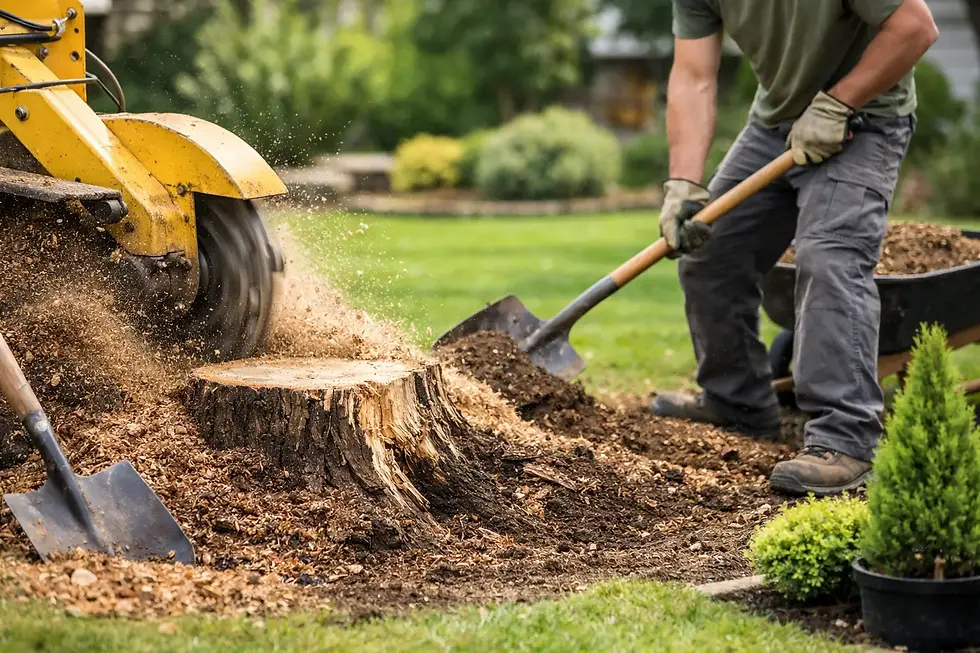
For most residential properties, stump grinding is the practical middle ground. The stump is ground below grade, the visible obstacle is gone, and the area can usually be restored with far less disruption than full excavation. It is faster, cleaner, and better suited to typical yards where homeowners want the problem gone without turning the whole area into a construction zone.
That is why stump grinding is usually the go-to choice when speed, appearance, and convenience matter most.
What affects the difficulty of stump removal
Not all stumps are equal. Size matters, of course, but location often matters just as much. A medium stump in an open lawn may be easier to deal with than a smaller one tucked against a fence, close to a foundation, or surrounded by landscaping.
Tree species also changes the job. Some root systems are denser and tougher than others. Age matters too. An old, partially decayed stump can sometimes grind differently than a fresh hardwood stump. If roots are pushing up near the surface or spreading into a planting area, cleanup and finish work may need more attention.
Access is another big factor that homeowners do not always consider. If equipment has a straight path into the backyard through a gate, the job is often simpler. If the stump sits behind retaining walls, tight corners, or delicate features, that can change labor time and approach.
Should you remove a stump yourself?
This depends on the stump, your tools, and your tolerance for hard labor. For a very small stump, a determined homeowner with the right digging tools might get it done. The problem is that many DIY attempts start with confidence and end with a half-dug crater, cut roots, and a stump still stuck in place.
Renting a stump grinder is possible, but it is not always the bargain it first appears to be. You still need transportation, time, protective gear, and enough confidence to operate the machine safely around your property. You also need to think about cleanup, buried obstacles, and utility concerns before you ever start the machine.
If the stump is large, close to structures, or in a finished yard you care about protecting, hiring a pro is usually the lower-stress option. The right specialist can often do in a short visit what takes a homeowner an entire weekend and leave the area looking far better afterward.
Safety issues homeowners should not ignore
Stump removal is one of those jobs that looks simple until you are standing next to spinning equipment or cutting into roots you cannot fully see. Rocks, hidden metal, and root flare can all create surprises. So can utility lines.
Before any grinding or deeper removal work, underground utility locations need to be addressed. That is not a small detail. It is part of doing the job responsibly. Homeowners should also think about nearby fences, sheds, patios, sprinkler lines, and septic-related components if the stump is anywhere near them.
Insurance matters too. If you are hiring someone, ask whether they are fully insured. A low quote does not mean much if the job is careless or damage gets handled badly.
What the process usually looks like with a pro
A straightforward stump removal job should feel simple from the homeowner side. You show the stump or send photos, get a clear estimate, confirm access, and schedule the work. On the day of service, the area is checked, the stump is ground or removed based on the agreed scope, and the site is cleaned up.
The cleanup piece matters more than people think. Homeowners are not just paying for the stump to disappear. They want the yard to look better when the work is done. That means managing grindings properly, leveling the area as needed, and leaving the site in a condition that does not create a second chore.
That straightforward, no-nonsense approach is exactly why many property owners prefer a specialist like Level Ground Stump Grinding. When a company focuses on stump work every day, the process tends to be faster and more predictable.
How much stump removal usually costs
Pricing depends on size, number of stumps, access, and location on the property. One stump in an open front yard may be a quick, affordable job. Multiple stumps across a fenced backyard, especially with tight access, will usually cost more.
The cheapest option is not always the best value. If one company gives a vague number over the phone and another asks the right questions about size, access, and cleanup, the second quote may tell you more about how the job will actually go. Homeowners usually care about three things: fair pricing, showing up when promised, and leaving the area clean. A good estimate should reflect all three.
If you are comparing quotes, ask what is included. Does the price cover grinding below grade? Are surface roots part of the job? What happens to the debris? Will the area be backfilled or left with grindings? Clear expectations save frustration later.
How to prepare your yard before the appointment
Preparation is usually light, but a few small steps help the job go smoothly. Clear toys, furniture, hoses, or decorations away from the area. Make sure there is access through any gates. If pets use the yard, plan to keep them inside during the work.
It also helps to point out anything nearby that should be protected or avoided, especially irrigation heads, invisible fence lines, edging, or low landscape lighting. Even when a contractor is experienced, the more clearly the area is identified, the smoother the visit tends to be.
What happens after the stump is gone
Once the stump is removed or ground down, you have options. Many homeowners reseed the spot, add topsoil, or fold the area into a garden bed. Others use the newly cleared space to fix drainage, widen lawn lines, or finish a landscape project that had been delayed.
This is where the real benefit shows up. The yard feels easier to use. It looks finished. You stop working around the problem because the problem is gone.
A good stump job should not feel complicated from start to finish. It should feel like one of those satisfying home improvements where the result is immediate, the space is more usable, and the whole property looks cleaner when it is done. If you have been stepping around the same old stump for months, that is probably your answer right there.


Comments