


How to Remove Tree Stump the Right Way
- Massimo Hagen
- Jun 7
- 6 min read
Updated: Aug 4
That stump looked manageable the day the tree came down. A few weeks later, it is still sitting in the middle of the yard, catching the mower, getting in the way of new landscaping, and making the whole area look unfinished. If you are figuring out how to remove tree stump without turning your yard into a bigger project, the real answer depends on the size of the stump, the root system, and how clean you want the final result to look.
For most homeowners, stump removal is less about cutting wood and more about getting the yard back. You want the obstacle gone, the area usable again, and the cleanup handled properly. That is why it helps to understand the main options before you start.
How to remove tree stump: your main options
There is no single method that works best for every stump. Small, older stumps in loose soil are very different from a fresh hardwood stump with a wide root flare. In most residential yards, the realistic choices are manual removal, chemical rotting, burning where allowed, or stump grinding.
Manual removal means digging around the stump, cutting major roots, and levering the stump out of the ground. It can work, but it is labor-heavy and usually only makes sense for smaller stumps. Once the stump diameter grows, the amount of digging and root cutting goes up fast.
Chemical removal is slower. You drill holes, apply a stump remover product, and wait for the wood to soften and decay over time. It is a low-effort approach, but not a fast one. If your goal is to reclaim the yard this season, chemicals usually test your patience.
Burning sounds simple, but it often is not practical in a neighborhood setting. Local rules, fire risk, weather, and the fact that fresh wood does not burn easily all make this option less attractive than it appears.
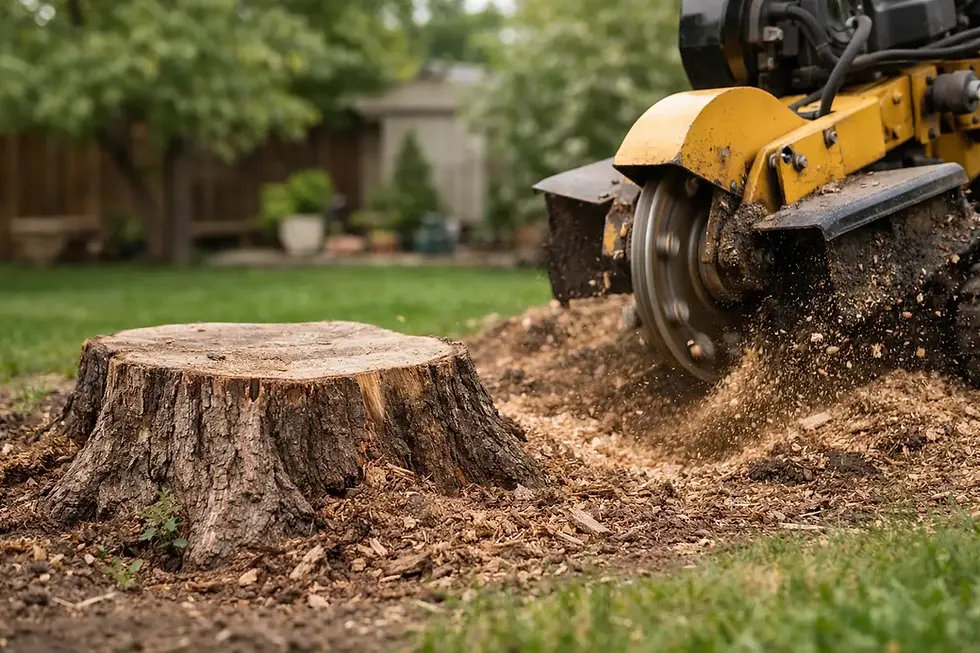
Stump grinding is usually the fastest and cleanest way to deal with a stump in a finished yard. Instead of ripping out the entire root ball, a stump grinder chews the stump down below grade so the area can be filled, leveled, and reused. That is why it is the method most homeowners choose when they want visible results without a torn-up lawn.
When manual stump removal works
If the stump is small - think sapling-sized or from a small ornamental tree - manual removal can be worth trying. You cut the stump as low as possible, dig around the base, expose the larger roots, and cut them with a saw, loppers, or an axe. After that, you work the stump loose and pull it free.
The problem is not usually the center of the stump. It is the roots. Some spread farther than expected, and some dive deeper into compacted soil. What looks like a one-hour job can turn into a full weekend, especially if the tree was healthy when it was cut down.
Manual removal also leaves a larger hole than many homeowners expect. That means hauling out the stump, dealing with heavy debris, backfilling the space, and restoring the grade so the yard does not settle unevenly later.
Why chemical stump removal is slow
Chemical stump removers are designed to speed up natural decay, not make a stump disappear overnight. The usual process is to drill holes into the top of the stump, add the product, and keep the stump moist so the wood begins to break down.
This method can help if the stump is out of the way and you are not in a hurry. It can also reduce the effort needed later if you plan to chop apart the softened stump. But it is rarely the best answer for a front yard eyesore, a mowing obstacle, or a spot where you want to plant or reseed soon.
There is also a cosmetic issue. While the stump is rotting, it is still there. In some cases, it can attract insects or become soft and messy before it is fully gone. If what bothers you most is the look of the yard, waiting months for decay may not feel like much progress.
Is burning a stump worth it?
Usually, no. Even where it is legal, burning a stump takes more setup and monitoring than most people expect. Green wood holds moisture, roots underground do not burn cleanly, and the process can drag on. There is also the risk of damaging nearby grass, fencing, or landscape beds.
For residential properties, burning is often more trouble than it is worth. Between local restrictions and the time involved, it is not the dependable option many homeowners are looking for.
Why stump grinding is usually the best choice
If you want the stump gone without excavating half the yard, grinding is usually the practical answer. A stump grinder reduces the stump into wood chips and takes it below the soil line, which allows the area to be filled in and used again.
This matters for a few reasons. First, it restores the function of the space. You can mow over it, seed it, or prepare it for another landscaping project. Second, it limits disruption. Full root-ball extraction can leave a major crater and disturb surrounding lawn, edging, or nearby plantings. Grinding keeps the mess more contained.
It is also a better fit for most suburban and residential lots. Access is often tight, and homeowners do not want heavy excavation equipment crossing the property. A stump grinder is built for this specific job.
That is the reason specialty companies focus on it. When a service is built around stump grinding, the process tends to be faster, cleaner, and more predictable than hiring a general contractor to improvise a solution.
What makes stump removal harder than it looks
A lot of stumps seem simple until the work starts. Tree species matters. Hardwood stumps are denser and tougher than softer species. Fresh-cut stumps are heavier and harder to deal with than old, dried-out ones. Root spread can extend well beyond the visible base, especially in mature trees.
Location matters too. A stump near a fence, walkway, retaining wall, or foundation needs a more careful approach. So does a stump close to utility lines, irrigation, or underground features you may not know are there.
That is one reason professional stump grinding is often the safer route. A reliable contractor will think about access, machine fit, cleanup, and utility safety before the grinding starts. In New Hampshire and elsewhere, utility marking is not something to guess at.
DIY vs. hiring a stump grinding specialist
There are cases where DIY makes sense. If the stump is tiny, you already have the tools, and you do not mind some digging and cleanup, it may be worth handling yourself. For anything larger, the cost of time, equipment rental, and yard repair often changes the math.
Rental stump grinders exist, but they are powerful machines with a learning curve. They can damage turf, throw debris, and be tough to maneuver if you have never used one before. What saves money on paper can end up costing more if the lawn is gouged, the stump is only partly removed, or cleanup gets left half done.
Hiring a specialist is often less about avoiding work and more about getting a cleaner end result. Homeowners usually care about three things: the stump is gone, the property looks better, and the job does not become a headache. That is exactly where a stump-only service tends to shine.
What to expect after the stump is removed
Once a stump is ground down, you will usually be left with a mix of wood chips and soil in the area. Some homeowners keep the grindings as mulch. Others prefer to have the area cleaned up, filled with topsoil, and left ready for seed.
This is worth asking about upfront, because “stump removed” can mean different things depending on the company and the method used. If your goal is a smooth, finished patch of yard, you want to know how deep the stump will be ground and what the site will look like when the crew leaves.
The best result is not just the disappearance of the stump. It is that the area no longer looks like a tree used to be there.
The best way to choose
If the stump is small and out of sight, you can take the slow route. If it is large, fresh, or sitting right where you need clean usable space, grinding is almost always the better call. It is faster, neater, and more practical for the way most homeowners actually use their yards.
That is why so many people stop researching methods and simply get a quote. A good stump grinding company can tell you quickly what is realistic, what the access looks like, whether utilities need to be marked, and how the finished area will be handled. For homeowners who want it done without hassle, that clarity matters just as much as the machine.
If you are staring at a stump that has already overstayed its welcome, the smartest move is the one that gets your yard back with the least mess and the fewest surprises.


Comments