


Is Stump Grinding Safe Near Septic Systems?
- Massimo Hagen

- 12 hours ago
- 5 min read
A stump can sit in exactly the wrong place: beside the driveway, in the middle of a future garden bed, or close to the area where your septic system does its work underground. Homeowners often ask, is stump grinding safe near septic systems? The honest answer is yes, it can be, but only when the stump location, septic layout, and grinding plan are understood before the machine starts.
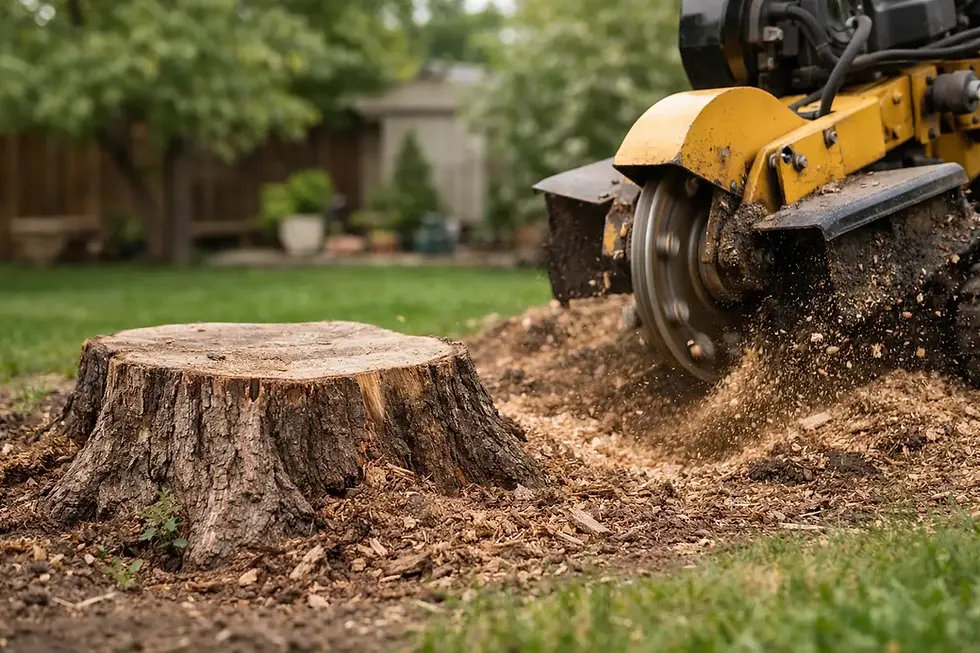
Stump grinding is far less disruptive than digging out a stump with an excavator. Still, a grinder is powerful equipment. Its cutting wheel works below the surface, and the machine needs stable ground to operate. When a septic tank, distribution box, pump chamber, or leach field is nearby, guessing is not good enough.
Is Stump Grinding Safe Near Septic Systems?
It depends on what “near” means. A stump located well outside the tank area and leach field may be a straightforward job. A stump directly over a septic line, on top of a tank, or within the drain field requires much more caution and may not be a good candidate for routine grinding.
The biggest concern is usually not that the grinding wheel will reach a buried tank. Most stump grinders work several inches below grade, while septic tanks and main lines are generally deeper. The real risks are ground pressure from equipment, unknown shallow components, old or poorly documented system layouts, and root systems that may be tangled around pipes or chambers.
A professional should treat the septic system as a no-guess zone. That means identifying its known components, looking at the property layout, and choosing a method that protects the system instead of simply taking the fastest path to the stump.
Know What Is Buried Before Grinding Begins
Not every septic system is laid out the same way. A typical residential system may include a tank, inlet and outlet pipes, a distribution box, and a leach field. Some homes also have pump tanks, alarms, replacement areas, or older components that do not show up where a homeowner expects them.
The septic tank is often easier to locate than the leach field. Homeowners may know where the tank cover is, especially if it has been pumped recently, but not know exactly where the outlet line runs or where the distribution box sits. The leach field can extend across a broad section of the yard and should not be treated like ordinary lawn.
Before scheduling stump work near a septic area, gather any records you have from the septic installer, town permits, prior pumping service, or property plans. If you are unsure where the system is located, ask your septic professional to identify the components. Calling for required utility markings is also a smart step, but remember that utility locates do not necessarily identify private septic lines or the limits of a leach field.
Why the Leach Field Needs Extra Protection
A leach field relies on healthy, uncompacted soil to move and treat wastewater. Heavy equipment crossing it can compress the soil and reduce how well the field works. That damage may not be obvious the day after a stump is removed. It can show up later as slow drains, wet areas, odors, or a costly septic repair.
This is why access matters as much as the stump itself. A careful operator considers where the stump grinder will sit, how it will enter and leave the yard, and where the grindings will be placed. Driving over the leach field simply because it is the shortest route is not worth the risk.
Smaller, maneuverable stump grinders can be a better fit for tight residential yards, but smaller does not mean risk-free. The safe choice depends on the soil conditions, slope, system location, and distance from the work area.
Roots Can Complicate the Job
Tree roots and septic systems do not always get along. Roots naturally seek moisture, and small cracks or loose pipe connections can attract them. If a tree grew close to a septic line for years, its roots may be wrapped around or pressing against the pipe.
Grinding the stump removes the visible portion of the tree and cuts away much of the root crown. It does not pull every root from the ground, which is often a good thing near buried infrastructure. Aggressive excavation or trying to yank out the entire root system can create more risk than controlled grinding.
There is a trade-off, though. If roots have already entered or damaged a septic pipe, stump grinding will not repair that issue. A septic contractor may need to inspect the line separately. In some cases, leaving a portion of the stump or adjusting the grinding depth is the responsible call until the septic layout is confirmed.
Safe Planning Starts With a Clear Work Zone
A good stump grinding plan near septic systems starts before the equipment arrives. The homeowner should point out the known septic tank location, lids, cleanouts, pump alarms, and any damp or soft areas in the yard. If there are sketches, photos from a recent pumping visit, or old permit records, have them available.
The operator should then look at the stump, its diameter, the surrounding grade, and the most sensible machine route. A stump close to a septic component may need a different approach than one near an open lawn. Sometimes the safest option is to grind only to a conservative depth, rather than chasing every last root below the surface.
Avoid piling stump chips over septic lids, cleanouts, or the leach field. Mulch-like grindings can be useful elsewhere in the yard, but septic access points should remain easy to find. A clean finish should not make future septic service harder.
When You Should Call a Septic Professional First
There are situations where stump grinding should wait for a septic inspection or location service. Do that first if the stump is directly above a suspected pipe route, close to a tank cover or distribution box, or inside the known leach field area.
You should also pause if the yard has unexplained wet spots, sewage odors, backups, unusually lush strips of grass, or a septic system that is already overdue for service. Those signs do not automatically mean the stump caused a problem, but they do mean the system deserves attention before equipment works nearby.
Older homes can be especially tricky. Septic records may be incomplete, and a system may have been altered over time. The right answer may be simple once the components are located, but it is better to confirm than to assume.
What Homeowners Can Do Before the Appointment
You do not need to become a septic expert to help make the job safer. Mark any known septic lids or cleanouts and clear movable items from the access route. Let the stump grinding company know ahead of time that a septic system is nearby, even if you believe the stump is outside the system area.
Avoid directing equipment across the leach field to save a few steps. If the only available access crosses the field, say so during the estimate stage. That gives the contractor a chance to assess the situation honestly instead of discovering a limitation after arriving.
Photos can also help with an initial quote and planning conversation. Include the stump, the surrounding yard, gates or fences, slopes, and any visible septic features. Clear information leads to a clearer plan and fewer surprises.
The Goal Is a Clean Yard Without Creating a Bigger Problem
Stump removal should give you usable space back, not create an expensive septic headache. With the septic components identified, equipment kept off sensitive areas, and the grinding depth matched to the site, many stumps near septic systems can be handled safely.
At Level Ground Stump Grinding, that kind of job starts with looking at the property, not making assumptions. We grind ’em til you can’t find ’em, but never at the expense of what is buried below your yard. If a stump is near your septic system, share what you know about the layout when requesting an estimate, and a careful plan can keep your yard looking better while protecting the system you rely on.


Comments