


Professional Stump Grinding vs DIY Costs
- Massimo Hagen
- Jul 11
- 5 min read
That old stump may look like a simple weekend project until you try to mow around it, dig through its roots, or move a heavy grinder across uneven ground. When weighing professional stump grinding vs DIY, the right choice usually comes down to more than the rental price. Access, safety, cleanup, stump size, and what you want to do with the space afterward all matter.
For some homeowners, a small, open-area stump can be a reasonable do-it-yourself job. For others, renting equipment turns into a long day of hauling, digging, and hoping nothing gets damaged. Here is a practical way to look at the difference before you commit.
Professional Stump Grinding vs DIY: The Real Difference
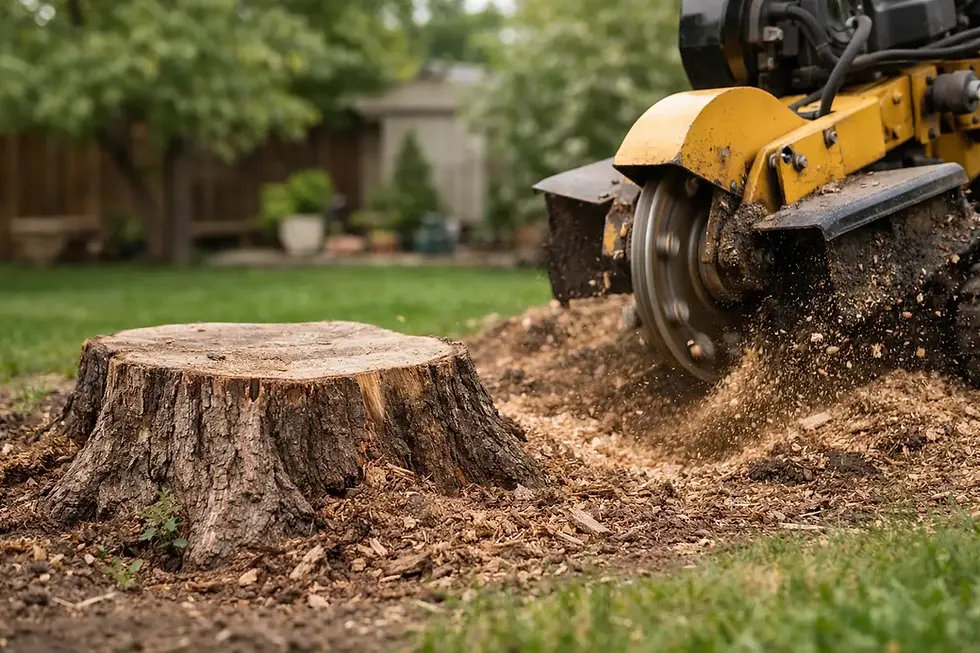
A professional stump grinder is operated by someone who uses the equipment regularly, knows how to position it, and can read the conditions around the stump. That includes the tree species, root flare, slope, nearby fence lines, landscaping, irrigation, and access through the yard. The goal is not simply to make the stump shorter. It is to grind it below grade so the area can be cleaned up, leveled, and put back to use.
DIY stump grinding generally means renting a machine, getting it home, loading or unloading it, learning the controls, and returning it within the rental window. Some rental grinders are compact enough for a homeowner to handle, but they still have powerful cutting wheels and can be difficult to maneuver. A stump that appears small from above can have a wide root flare just below the soil.
The difference is experience and efficiency. A specialist can often complete the grinding and cleanup in far less time than it takes a first-time renter to pick up the equipment, read the instructions, and get comfortable operating it.
Start With the Stump, Not the Price Tag
The size of the visible stump is only part of the job. A stump from a mature maple, oak, pine, or other large tree may have substantial roots and a broad base. Hardwood is usually slower to grind than softer wood. A stump sitting beside a retaining wall, shed, patio, utility box, or garden bed requires more care than one in the middle of an open lawn.
Access can change everything. Can a grinder get through a gate? Is there a steep hill, loose soil, narrow side yard, or stone edging in the way? Southern New Hampshire properties can also bring ledge, rocky soil, and uneven terrain into the equation. Those conditions do not automatically prevent grinding, but they affect the equipment and approach needed to do it safely.
A small stump in a flat, open backyard may make DIY worth considering if you are comfortable using machinery. A large stump near structures or landscaping is usually where professional service earns its value quickly.
What DIY Stump Grinding Actually Costs
Rental rates are the obvious expense, but they are not always the full cost. You may also need a truck or trailer to transport the grinder, fuel for the machine, safety gear, and a way to handle the pile of wood chips afterward. If the rental period runs longer than expected, the bill can grow.
There is also the value of your time. First-time operators often spend considerable time learning how to make controlled passes across the stump. Grinding is not a one-and-done cut. You work the stump down gradually, moving across the wood and checking depth as you go. If there are surface roots in the way of a future lawn, garden, or hardscape project, those may need attention too.
DIY can look less expensive on paper for one modest stump. But if you need to rent equipment, take time off, arrange transportation, and still deal with cleanup, the savings may be smaller than expected. That is especially true when several stumps need to be removed at once.
Safety Is More Than Wearing Goggles
Stump grinders throw chips, dirt, and occasional debris with real force. Eye protection, hearing protection, gloves, sturdy footwear, and close-fitting clothing are basic requirements. The operator also needs to keep children, pets, and bystanders well away from the work area.
The bigger concern is what cannot be seen. Underground utility lines, irrigation components, landscape lighting wires, drainage lines, and buried objects can all create problems. Before any digging or grinding work, arrange for utility marking through 811 and identify any private lines or property features that may not be included in public utility marking.
A professional operator is also insured and accustomed to working around property features. That does not mean every site is risk-free. It means the person doing the work has a process for evaluating the risks before starting the machine.
Cleanup Is Part of the Job
Grinding creates mulch-like wood chips mixed with soil. Depending on the stump size and the depth of grinding, there can be more material than homeowners expect. Some people reuse clean chips around trees or in natural areas. Others want the pile removed so they can add topsoil and seed, extend a garden bed, or prepare for a new planting.
This is where the final result matters. A stump cut close to ground level is still a stump. A professionally ground area should be left clean and visually improved, with the stump ground to the agreed depth and the debris handled according to the job plan.
Keep expectations realistic about roots. Stump grinding removes the stump and breaks down the main root flare below the surface. It does not pull every long root from the yard like a full excavation. In most residential situations, those remaining roots decay over time. If you are installing a patio, building an addition, or planting a large new tree in the same exact spot, mention that before the work is scheduled.
When Hiring a Professional Makes More Sense
Professional grinding is often the better call when the stump is large, old, hard, or close to something you do not want damaged. It is also a strong option when there are multiple stumps, limited equipment access, or a tight timeline for landscaping work.
Homeowners often hire out the job because they want their yard back without spending a Saturday wrestling a rental machine. They want to mow a clean lawn, stop tripping over an old stump, make room for a play area, or finish a garden project. Those are practical reasons, not luxuries.
A local stump grinding specialist can typically provide a job-specific estimate based on photos, size, access, and location. Clear pricing upfront is especially helpful when you are comparing the full cost of a rental against a finished result.
When DIY Can Be a Fair Choice
DIY may be reasonable if the stump is small, the area is open, you already have a safe way to transport a grinder, and you are comfortable operating heavy equipment. It can also make sense for someone who has several uncomplicated stumps and enough time to work carefully.
Be honest about the project, though. If the stump is close to a fence, stone wall, garden, driveway, or utility area, the rental machine does not become easier just because the stump is small. If you have doubts about access, underground lines, or your ability to control the equipment, those doubts are worth listening to.
Choose the Result You Want to See
The best choice is the one that leaves you with usable space and no lingering headache. If DIY gives you a safe, manageable project and genuine savings, it may be the right route. If you want fast, insured work with the chips handled and the eyesore gone, hiring a specialist is usually money well spent.
For homeowners who would rather get back to enjoying the yard, Level Ground Stump Grinding keeps the job simple: assess the stump, provide a clear estimate, grind it down, and clean up the area. After all, the point is to grind 'em til you can't find 'em.


Comments