


Will Stump Grinding Attract Termites? The Facts
- Massimo Hagen

- Aug 2
- 5 min read
A freshly ground stump can leave behind wood chips, exposed roots, and a patch of bare soil, so it is fair to ask: will stump grinding attract termites? For most homeowners, the answer is no. Grinding does not create a termite problem. In many cases, removing a decaying stump and reducing the amount of old wood in the yard can make the property less inviting to wood-destroying insects over time.
The bigger issue is what was already there. A dead stump, buried roots, damp mulch, or wood debris near the foundation can give termites a place to feed or travel. Stump grinding removes the most visible piece of that problem, but the cleanup and site conditions afterward still matter.
Will Stump Grinding Attract Termites or Remove Their Food Source?
Termites are attracted to cellulose, the material found in wood and many plant products. They are also drawn to moisture and protected areas where they can travel without being exposed. An old stump that has been sitting in the ground for years can check several of those boxes, especially if it is soft, rotting, and consistently damp.
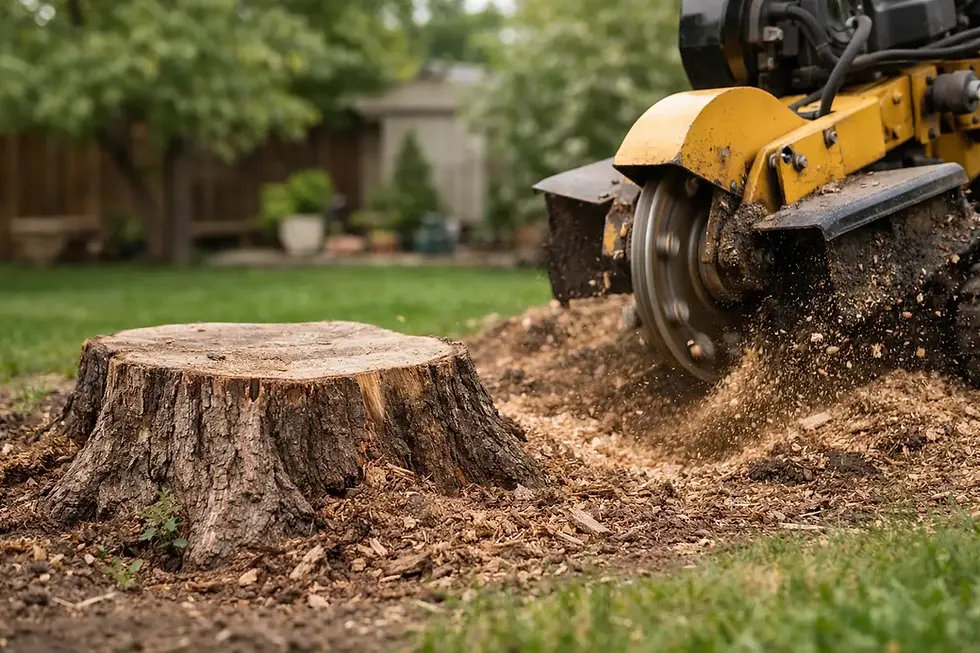
Grinding the stump turns the above-ground portion into mulch-sized material and removes the large piece of decaying wood. That does not signal termites to come to your yard. Termites do not show up because a stump grinder was used. They show up when suitable food, moisture, and access are available.
There is one practical detail to understand: stump grinding does not remove every root from the soil. Some roots remain below grade, where they will naturally break down over time. If termites were already feeding in the old stump or root system, grinding can expose evidence of activity that was previously hidden. That can make it seem like the grinding caused the problem when it actually revealed one that was already present.
For that reason, stump removal is generally a better long-term yard decision than leaving a decaying stump in place. It eliminates the main mass of old wood, clears a mowing obstacle, and gives you a cleaner area for grass, planting, or other landscaping work.
What Happens to the Wood Chips After Grinding?
The pile of wood chips left after stump grinding is usually the part homeowners worry about most. The answer depends on how the chips are handled and where they are placed.
Wood chips can be useful in a yard. They can help cover bare ground, reduce weeds, and retain soil moisture around trees and shrubs. But a deep pile of fresh stump grindings directly against your home is not a good idea. Any wood-based mulch can hold moisture near a foundation, and moisture is something you want to control around the house whether termites are present or not.
A good rule is to keep stump grindings, mulch, firewood, and other wood debris away from the foundation. Do not build a thick layer against siding, porch posts, basement windows, or deck supports. Maintain a visible gap between soil or mulch and wood siding, and make sure the ground slopes away from the home so water does not collect there.
If the stump was far from the house, the chips are generally a much smaller concern. You may choose to spread them thinly in a garden area, use them around shrubs, compost them with other organic material, or have excess material removed. If you plan to seed grass over the spot, removing or blending excess chips with soil is often the best path to a smoother lawn.
A Stump Is Not the Same as a House Infestation
Finding insects in an old stump does not automatically mean they are attacking your home. Decaying stumps support plenty of life, including ants, beetles, fungi, and other insects that help break down dead wood. Some of those insects are commonly mistaken for termites.
Termites have straight, bead-like antennae and a broad waist. Winged termites have equal-length wings. Carpenter ants, another insect homeowners often notice around old stumps, have elbowed antennae, narrow waists, and front wings that are longer than their back wings. Carpenter ants tunnel through wood for nesting, but they do not eat it as food the way termites do.
If you see insects while a stump is being ground, there is no need to panic. The disturbance may send insects moving out of the wood or soil. What matters is whether there are signs of activity near the home itself. Mud tubes on foundation walls, damaged or hollow-sounding wood, piles of shed wings indoors, and soft wood around sills or decks are reasons to call a licensed pest professional for an inspection.
Conditions That Make a Yard More Appealing to Termites
Stump grinding is only one piece of the picture. Termite risk is more closely tied to ongoing moisture and wood-to-soil contact than to a single service visit. Homeowners should pay attention to the conditions around the house, particularly after rain or snowmelt.
Common trouble spots include leaking spigots, clogged gutters, downspouts that empty at the foundation, buried lumber, old landscape timbers, and stacked firewood near the house. A deck or fence post that stays damp at ground level can also become a concern. These issues do not guarantee termites, but correcting them removes easy access and damp hiding places.
Southern New Hampshire homeowners also deal with freeze-thaw cycles, heavy spring moisture, and shaded yards that can stay wet longer than expected. If a removed stump was in a low, soggy area, consider improving drainage before planting or reseeding. A dry, well-graded yard is easier to maintain and less favorable to a range of wood-damaging pests.
When to Take Extra Precautions After Grinding
Most stump grinding jobs do not require termite treatment. Applying pesticides as a routine response to a ground stump is usually unnecessary, especially without confirmed termite activity. The right next step depends on what was found and where the stump was located.
Consider a pest inspection if the stump was very close to your foundation, if you saw clear termite signs in the stump, or if the area around your home has other risk factors such as chronic moisture or wood debris. An inspection is also sensible if you are planning a major project nearby, such as a new deck, addition, patio, or garden structure.
If there is active termite activity in or near the house, pest control and stump grinding solve different parts of the problem. A qualified pest professional addresses the infestation and treatment plan. A stump grinding specialist removes the old stump and helps clear the yard condition that may have been adding unnecessary decaying wood to the property.
Make the Stump Area Easy to Maintain
Once the stump is ground, do not ignore the spot for the next few seasons. The remaining roots can continue to settle as they decay, and the ground may dip slightly over time. Adding topsoil, leveling the area, and reseeding grass can help restore the yard and prevent water from pooling in the old stump location.
If you are installing a garden bed, keep any mulch layer reasonable and avoid piling it high against nearby wood structures. If you are planting a new tree, choose a location that gives the new roots room to grow rather than planting directly in the old stump hole. Good site cleanup makes the finished result look better and keeps future maintenance simple.
At Level Ground Stump Grinding, the goal is straightforward: remove the eyesore, leave the area clean, and give you usable yard space again. A stump does not need to stay in the ground as a hidden source of decay just because you are worried that grinding it might attract pests.
If an old stump is soft, unsightly, in the way of mowing, or close to the areas you use most, removing it is usually the practical move. Keep the remaining chips and moisture away from the foundation, watch for genuine signs of pest activity, and enjoy a yard with one less problem to work around.


Comments