


Top Yard Hazards Caused by Old Stumps at Home
A stump can look harmless when it sits at the edge of the lawn, especially if it has been there for years. But the top yard hazards caused by old stumps tend to show up at the worst times: during a backyard game, while mowing wet grass, or when a new landscaping project is already underway. What starts as an old eyesore can become a safety issue, a maintenance headache, and an obstacle to using your own property the way you want.
For homeowners, the question is not always whether a stump needs to go. It is often how soon it makes sense to remove it. A small stump tucked behind a shed may not be urgent. One in a busy lawn, near a walkway, or beside a play area is a different story.
Why Old Stumps Become a Bigger Problem Over Time
A freshly cut stump is solid and easy to see. As months and years pass, weather, insects, and decay change it. The wood softens, the roots break down beneath the soil, and grass or weeds begin growing around it. That gradual change is exactly what makes an old stump easy to underestimate.
In Southern New Hampshire, freeze-thaw cycles can speed up the damage around a stump. Soil shifts, roots decay unevenly, and hidden voids can develop near the old root system. The stump may still look stable from above while the ground around it becomes rough, soft, or uneven.
Removing a stump is not always about making a yard look cleaner, though that is a welcome result. It is about clearing a space that no longer serves a purpose and can create problems as it continues to deteriorate.
Top Yard Hazards Caused by Old Stumps
Trip and fall risks
The most obvious hazard is also one of the most common. A stump creates a fixed obstacle in a place where people expect level ground. Kids running through the yard, guests heading to a patio, and anyone carrying tools, firewood, or groceries may not see it in time.
This risk gets worse when grass grows tall or leaves pile up around the stump. A low-cut stump can be particularly deceptive because it disappears into the lawn. At dusk, after a storm, or during a snowy New Hampshire winter, an obstacle that is already hard to spot becomes even harder to avoid.
A fall on a stump can mean more than a scraped knee. Uneven ground can cause ankle injuries, wrist injuries, and falls for older family members or visitors. If the stump sits along a regular path through the yard, removal is usually the practical choice.
Lawn mower and equipment damage
A stump and a moving mower are a bad combination. Even careful homeowners can clip a low stump hidden by grass. A strike can bend or dull mower blades, damage the deck, shear a belt, or send debris flying across the yard.
The problem is not limited to riding mowers. String trimmers hit old wood and exposed roots, while wheelbarrows, snow blowers, and small lawn tractors can catch on uneven ground around the stump. Repeatedly mowing around the same obstacle also leaves an awkward patch of uncut grass that makes the lawn look unfinished.
Some homeowners choose to keep a stump and simply mow around it. That can work for a stump far from the main lawn, but it is a trade-off. You are accepting extra time, uneven mowing, and the chance of an expensive equipment mistake every time the grass needs cutting.
Pests, decay, and unwanted growth
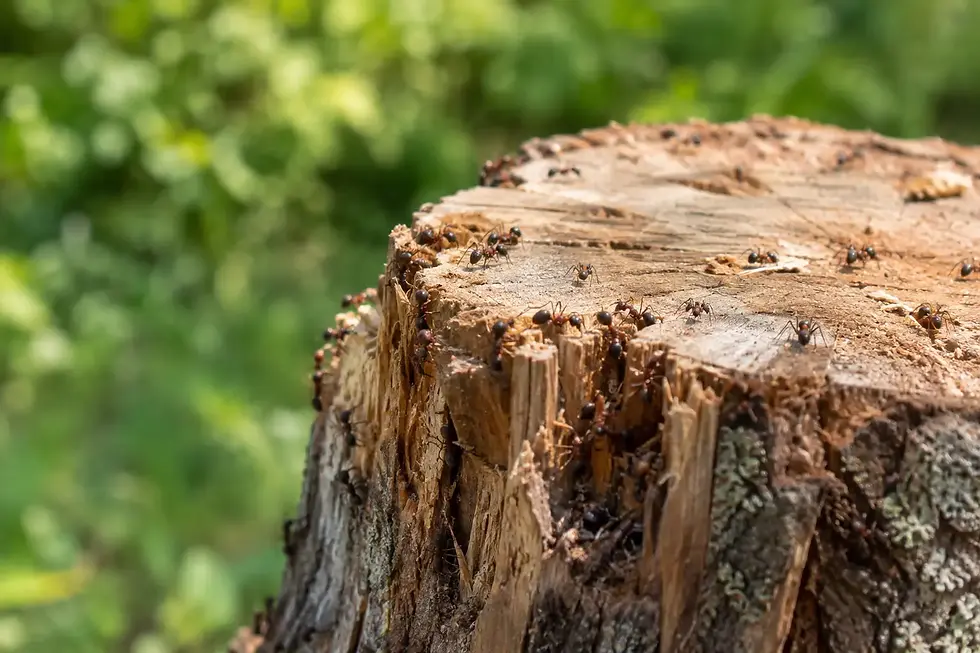
As a stump rots, it becomes a convenient home for insects and fungi. Ants, beetles, termites, carpenter ants, and other wood-dwelling pests may use decaying wood for shelter. Not every stump attracts a serious pest problem, and a stump in the far corner of a large lot may never affect the house. Still, leaving a decaying wood source close to a home, garage, deck, or woodpile is not a risk most homeowners need to take.
Fungi are another concern. Mushrooms around a stump are often a visible sign that decay is active underground. Some are harmless to people, but they can be a concern in yards where children and pets play. The bigger issue is that the root system may be breaking down below the surface, leaving soft spots that are not obvious from above.
Old stumps can also encourage suckers and volunteer growth. Depending on the tree species, shoots may continue popping up from roots or near the stump. You can cut them back, but they often return. Grinding the stump down and addressing the remaining roots helps stop a former tree from continuing to claim space in the yard.
Uneven ground and hidden root holes
The stump is only part of the problem. Tree roots can spread well beyond what is visible above ground. Once those roots begin to decay, the surrounding soil can settle. That may leave dips in the lawn, exposed roots, or small holes where water collects.
These changes may be gradual, but they matter when you are trying to mow safely, install a garden bed, build a fence, or set up a swing set. A settling root zone is especially frustrating because it can undo a landscaping project after the fact. Removing the visible stump early gives you a clearer path to leveling and restoring the area properly.
Obstacles for patios, gardens, fences, and new lawns
A stump can stop a project before it starts. It may sit right where a homeowner wants a shed pad, raised garden, fence post, patio extension, or fresh section of lawn. Trying to work around it often leads to compromises that do not look good and do not make the best use of the space.
Digging out a stump by hand is possible in limited situations, but it is usually more work than expected. Mature roots can extend far out from the stump, and cutting them out can leave a large, torn-up area of lawn. Burning or using chemical stump removers also has drawbacks, including long wait times, fire concerns, and incomplete results.
Professional stump grinding removes the stump below grade so the space can be filled, seeded, landscaped, or prepared for the next project. The right depth depends on what you plan to do there afterward. For example, a spot that will become lawn may need a different approach than an area planned for a patio or new tree.
When Should You Remove an Old Stump?
A stump deserves prompt attention when it is in a high-traffic part of the yard, near a driveway or walkway, beside a play area, or close to the house. It is also worth removing before listing a home, starting a landscaping project, or replacing aging lawn equipment. Buyers notice neglected stumps, and so do appraisers, contractors, and guests.
If the stump is large, deeply rooted, or close to utilities, do not treat removal as a casual weekend project. Utility lines may be buried where you do not expect them, and the right safety checks should happen before grinding or digging begins. A professional can assess access, stump size, surrounding structures, and the cleanest way to complete the job.
For a small stump in an unused back corner, timing may be less urgent. But even then, watch for decay, pest activity, spreading shoots, and changes to the ground around it. Waiting does not usually make removal easier. It simply gives the stump more time to interfere with the yard.
A Cleaner Yard Starts Below Ground
Stump removal should leave more than a shaved-down piece of wood. The goal is usable space, a smoother lawn, and a clean area ready for whatever comes next. That is why stump grinding is often the practical solution for homeowners who want the problem handled without turning the yard into a major excavation site.
Level Ground Stump Grinding helps homeowners throughout Southern New Hampshire clear old stumps efficiently, with straightforward estimates and professional cleanup. We grind 'em til you can't find 'em! Whether one stump is making mowing miserable or several are holding up a larger yard project, removing them can make the property safer and easier to enjoy.
The best time to deal with an old stump is before it becomes the reason someone trips, a mower gets damaged, or a project gets delayed. Clear it out, restore the ground, and put that part of the yard back to work.


Comments