


Top Signs You Need Stump Removal at Home
- Massimo Hagen
- Jul 30
- 5 min read
Updated: Aug 4
That stump may have seemed harmless when the tree first came down. A season later, it is still in the way of the mower, collecting leaves, catching a child’s foot, or sitting right where you planned to put a garden bed. The top signs you need stump removal usually show up in everyday use of your yard - not in a dramatic emergency.
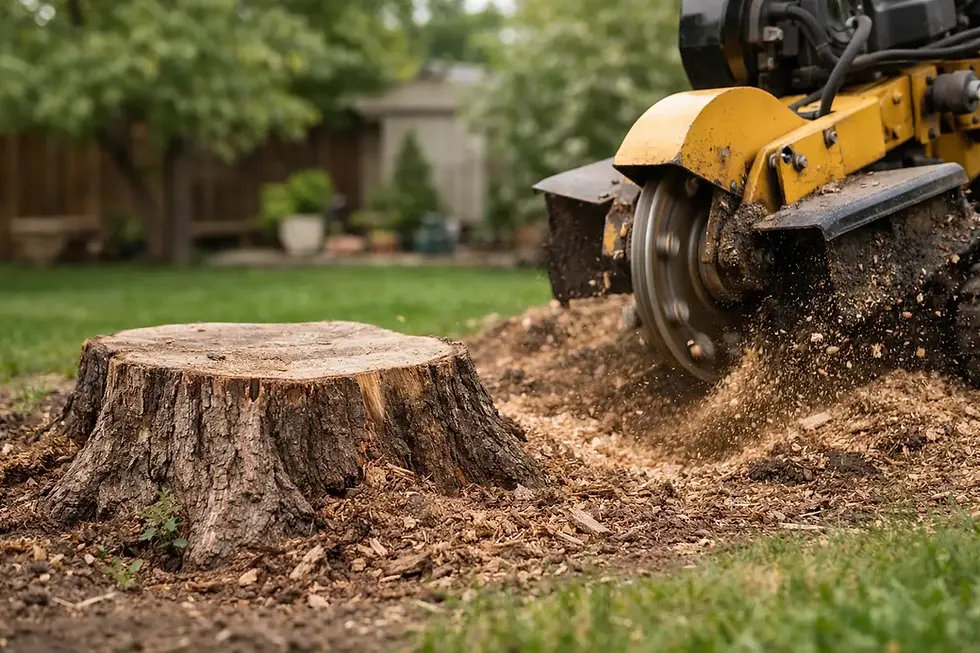
For most homeowners, the question is less about whether a stump can stay and more about whether it is worth working around. A professional stump grinding service removes the visible obstacle, restores usable space, and leaves the area ready for the next step in your yard plan.
Your Mower Keeps Finding It
A stump in the middle of the lawn turns a simple mowing job into a chore. You have to steer around it every week, trim the grass by hand, and keep an eye out for exposed roots that can catch a mower blade. If the stump is low enough to be hard to see, it can be worse than a tall one because it is easier to hit.
Repeated contact can damage mower blades, belts, and decks. It also leaves an awkward ring of overgrown grass that makes an otherwise neat yard look unfinished. When a stump is changing how you maintain your lawn, removal is usually the practical fix.
It Is Creating a Trip Hazard
Stumps and raised roots are easy to avoid when you are looking directly at them. They are much easier to miss when kids are playing, guests are walking across the yard, or you are carrying bags, tools, or firewood. Wet grass, fallen leaves, and snow can hide the problem even more.
This matters most near driveways, walkways, patios, play areas, sheds, and fire pits. A stump does not need to be large to be a hazard. Even a short, weathered stump can catch a foot or make someone lose balance.
If you are tired of warning people about it, that is a good sign the stump has outlived its usefulness.
You Are Planning a Yard Project
A leftover stump can stop a project before it starts. Maybe you want to expand the lawn, install a fence, build a patio, place a shed, add a swing set, or create a new planting bed. If the stump is in the footprint of that plan, working around it often leads to compromises you do not really want.
Removing it before construction or landscaping begins gives you more flexibility. It also helps prevent last-minute delays when a contractor finds the stump or root flare in the way. For smaller projects, a stump may be manageable. For anything that needs a level surface, clear digging area, or clean layout, it is usually better to deal with it first.
Grinding vs. Pulling the Whole Root System
Homeowners sometimes assume stump removal means excavating every root. In many residential yards, stump grinding is the cleaner, more affordable choice. The stump is ground below grade so the visible obstruction is gone and the area can be covered with soil, seed, or mulch. Most remaining roots naturally break down over time.
Full excavation may make sense when deep digging, foundation work, or a specific construction plan requires it. It can also cause more disturbance to nearby lawn, plantings, and hardscape. The right approach depends on the stump’s location and what you want to do with the space afterward.
The Stump Is Rotting or Attracting Pests
As stumps decay, they become damp, soft, and full of small gaps. That can attract insects and fungi, including ants, beetles, termites, and carpenter ants. A decaying stump does not automatically mean pests will move into your home, especially when it is well away from the house. Still, it can create a convenient habitat close to your lawn, garden, woodpile, or structure.
Mushrooms growing on or around a stump are another common sign of decay. They are part of the natural breakdown process, but they also tell you the wood is holding moisture. If the stump is near your home, deck, garage, or garden, removing it can eliminate a place where insects and decay are allowed to build up year after year.
New Shoots Keep Coming Back
Some tree species are persistent. Even after the trunk is cut down, the remaining stump or roots may keep sending up small shoots. You cut them back, they return, and before long you are spending time managing a tree you already removed.
Those shoots can pull energy from the remaining root system and make the area look messy. They may also pop up in inconvenient places several feet away from the stump. Grinding the stump removes the central source and helps you move on from the constant cleanup.
It is worth knowing that aggressive root systems can occasionally produce new growth for a while even after grinding. That depends on the tree species and the condition of the roots. But removing the stump is still the most effective way to stop the main problem at its source.
Your Yard Looks Unfinished
Not every reason for stump removal is about safety or pests. Sometimes the stump simply makes the property look neglected. This is especially true near the front yard, driveway, entry, or a freshly improved landscape. You may have removed a dead, damaged, or overgrown tree, but the remaining stump still draws the eye.
A clean yard has a different feel. There is more open space, easier sightlines, and no obvious reminder of a tree that is gone. This can matter when you are preparing to sell a home, hosting an event, or just trying to enjoy the improvements you have already made outside.
For homeowners in Southern New Hampshire, the change is often most noticeable in spring and summer, when mowing, gardening, and outdoor gatherings pick up again. What looked like a minor issue in winter can quickly become the one thing in the yard that keeps getting in the way.
You Have More Than One Stump
One stump may be tolerable. Several stumps can make a yard difficult to use and maintain. This often happens after clearing storm-damaged trees, removing old shrubs, or taking down a line of trees along a property edge.
Multiple stumps also give you a chance to improve the area all at once. Instead of scheduling separate projects and repeatedly repairing lawn damage, it can be more efficient to have the stumps addressed together. A job-specific estimate helps clarify the cost based on stump size, access, quantity, and location.
The Stump Is Near Utilities, Structures, or Tight Access Areas
Stumps near fences, sheds, retaining walls, utility boxes, wells, septic components, or underground lines need careful attention. This is not a good place for a rented machine or a do-it-yourself attempt. Stump grinders are powerful, and a tight location calls for the right equipment, experience, and a clear plan.
Before grinding begins, underground utilities should be properly marked through the required utility-locate process. A professional will also consider access, nearby landscaping, and where the grindings will go. The goal is to remove the stump without turning a small eyesore into a costly property repair.
When It Is Reasonable to Leave a Stump
There are situations where waiting makes sense. A stump at the far edge of a wooded lot may not affect mowing, safety, landscaping, or curb appeal. If it is stable, away from structures, and not producing shoots or creating a pest concern, it may be low priority.
But if you are working around it every week, planning around it for an upcoming project, or noticing rot and new growth, waiting rarely makes the job easier. Stumps do not improve with time. They either remain an obstacle or slowly break down into a softer, messier one.
Level Ground Stump Grinding keeps the process straightforward: assess the stump, provide a clear estimate, grind it below grade, and leave the space looking cleaner than before. When a stump is taking up room in a yard you want to use, it is time to make it disappear - grind ’em til you can’t find ’em.


Comments